How I became collapse aware
and how it’s going…
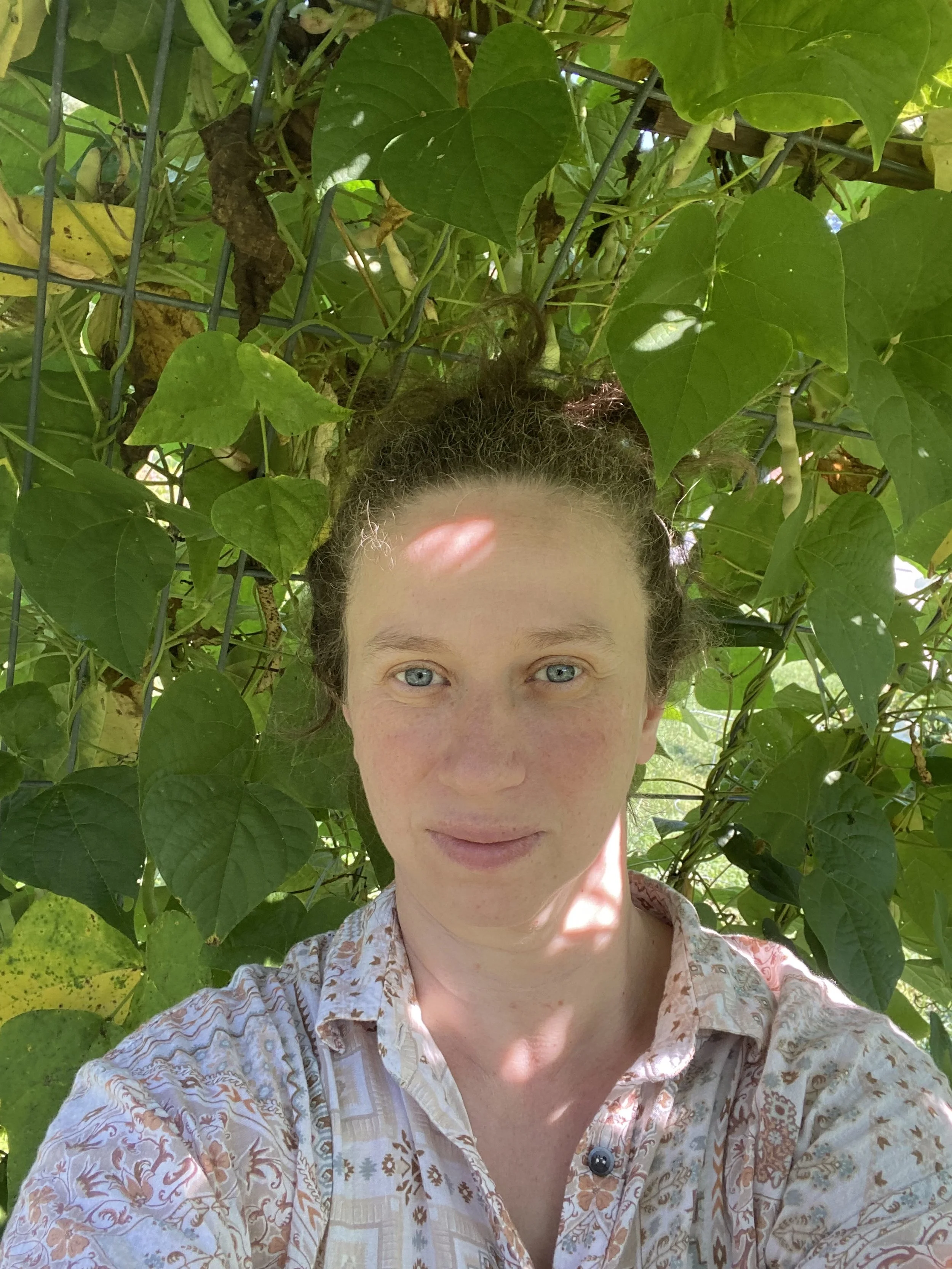
live a normal life. I drive a gas car, live in a ranch home, get my kid ready for school every day, pay my bills, and even put money into retirement accounts. On paper, we are a typical, middle-class family with two kids and a dog. We have both privileges and disadvantages. But inside, my mindset has shifted drastically from what it was in my younger days. The assumptions I now take for granted are very different from the ones I grew up with.
I’ve heard that some in the collapse community experience a day or a few days of intense grief, bargaining, and finally reach acceptance. For me, it was more like a sunrise on a cloudy day. Awareness did not burst onto the scene, suddenly illuminating all my unexamined assumptions. Instead, it slowly, slowly filled the sky with diffuse light, trees emerging into clarity, objects obscured by darkness now outlined, and finally becoming three-dimensional. There was no day or week that I went from unaware to aware; it was a series of shifts that took about five years to complete.
I liken collapse awareness to becoming aware that we will all someday die. That our parents, best friends, neighbors, pets, and even our children will live only a short time on this earth. This is a truth that all humans live with but rarely acknowledge. It is what makes life precious; it is what helps me refocus on the priorities I truly care about: my family, being kind, and making a positive impact on the world. But even more than this, it is what helps me focus on enjoying the small pleasures: a breath of cool, fresh air, my dog’s silky ears, laughing ridiculously hard at a bad joke, snuggling up with a loved one. Knowing that my body won’t always be alive to enjoy these things makes it so much more important to do them and savor them.
It’s impossible to always hold this truth at the forefront of our lives; if we did, we would never plan for the future. That’s how I function with collapse awareness. I go through moments where it is more at the forefront, for example, during a natural disaster or political upheaval, just like on a personal level, I become more aware and focused on my own mortality during a health crisis or while grieving a death. On a deeper level, knowing that industrial civilization is in the process of collapse helps me focus on the things that are most important to me and enjoy the pleasures of life when I can.
I came to this knowing through a lot of reading, listening, and self reflecting. When my older son was little, I would take him to the library story time and afterwards I would browse the books. Because I had always loved nature, cooking, frugal living, and reducing waste, I was drawn to the environmental books section. I read every book in that section. When we moved and were closer to a different branch, I read every book in that library’s environmental section. They all started sounding the same: “If we do xyz…we can avoid terrible consequences.” But when I looked around me it was clear we are not doing those things.
I felt such a heavy weight. I wanted so badly to make a change, to make a better world for my son. So I took on the project of reducing my carbon footprint and even started a group trying to teach others how to do it too. I got deeply involved with local activism. I went back to school and got a Master’s in Sustainability Studies. I got a job at a non-profit. These things while wonderful in their own way, did not bring me the sense of peace and progress that I hoped for. I did not feel like a small part of a big solution.
Instead, they left me feeling like something was being hidden from me, like I was being placated like a little child who has figured out something inconvenient, being told to look over here and play with this toy instead of looking at what the adults are doing. But all this studying and learning did bring me, through a sideways pathway, to collapse awareness, which has brought me peace. Though no book said it outright, I began looking for the pieces that actually made sense with what I was seeing in day-to-day life. That we humans are using up more and more of the earth’s resources and are not on a path to transition to a less resource-intensive culture.
This did eventually bring me to books that allowed me to see that this is widely agreed upon in the scientfic community. It’s just not stated blatantly; it’s hidden in a lot of academic jargon. Books like The Dark Mountain Projects, podcasts like The Great Simplification and Post Carbon Institute were a relief to read and listen to. Engaging with them meant I was not the only one who saw past the facade that we were on the right track and only need another technological breakthrough or a different political administration, that protecting the Arctic from drilling this time would fix the problem.
When I started mentioning my thoughts to others in the environmental world, the response was usually something like “Yes, we all know that, we just don’t talk about it because it’s too depressing and upsetting, we have to just do our small parts.” “Okay,” I thought, “I can do that.” But I couldn’t. I couldn’t keep going pretending not to know I couldn’t keep plugging small holes knowing the dam is bursting.
I am no longer in the bargaining phase of measuring and reducing my carbon footprint or encouraging others to do the same. I no longer work in the non-profit world. I have accepted that nothing I do can stop the collapse from happening. That resource depletion is already well underway, and I am not responsible for the suffering that is happening and will happen due to the collapse of this system.
I do focus on preparation, though I try to make sure not to let it slip into unhealthy, protectionist “prepping” behaviors. I do live in a way that many in the United States might consider extreme. I compost everything, I grow and preserve a lot of our own food, and I haven’t flown in an airplane in 11 years. I do these things not out of a righteous belief that if others followed my example, we would all be saved from collapse, but because they bring me joy.
It brings me joy to buy second-hand and give used items a new life. I love the connection that comes with gardening and composting. I love the focus and purpose that teaching others Permaculture has brought to my professional life. I feel better when I slow down and work with the rhythms of the seasons rather than in a state of constant busyness.
Collapse awareness has changed me, but not on the outside. I was always a misfit who preferred goofing around with dogs and kids and making a big pot of soup. I never fit into modern culture very well, so having this new awareness didn’t necessitate much exterior change. The changes that have taken place feel like a million tiny puzzle pieces clicking into place. I feel at peace. Now that I see that modern industri.al life is physically constrained and will come to an end at some point I feel less frantic. I still want it to stop; I want the degradation and abuse of people and planet to stop, but I no longer feel that it is a burden placed on my shoulders. I see my role as having shifted from trying to stop the dam from bursting to building rafts to carry as many people, plants, and animals as possible when the flood comes.